Chelsea Hotel’s History: NY Icon’s Evolution
The Chelsea Hotel stands as one of New York City’s most legendary and culturally significant residential properties, embodying over 150 years of artistic innovation, bohemian spirit, and architectural distinction. Located at 222 West 23rd Street in Manhattan’s Chelsea neighborhood, this iconic structure has served as home, muse, and gathering place for countless artists, musicians, writers, and cultural figures who shaped American history. From its opening in 1884 as a cooperative apartment building to its transformation into a residential hotel, the Chelsea has witnessed and fostered some of the most important creative movements of the modern era.
The Chelsea Hotel’s evolution reflects broader transformations in New York City’s real estate landscape, housing policy, and cultural priorities. Understanding the Chelsea’s history provides valuable insights into residential building preservation, long-term tenant rights, affordable housing challenges, and the tension between commercial development and cultural preservation in major metropolitan areas. This comprehensive exploration examines how a single building became synonymous with artistic freedom and what its journey tells us about housing, community, and urban development.
The Chelsea’s Architectural Origins and 1884 Opening
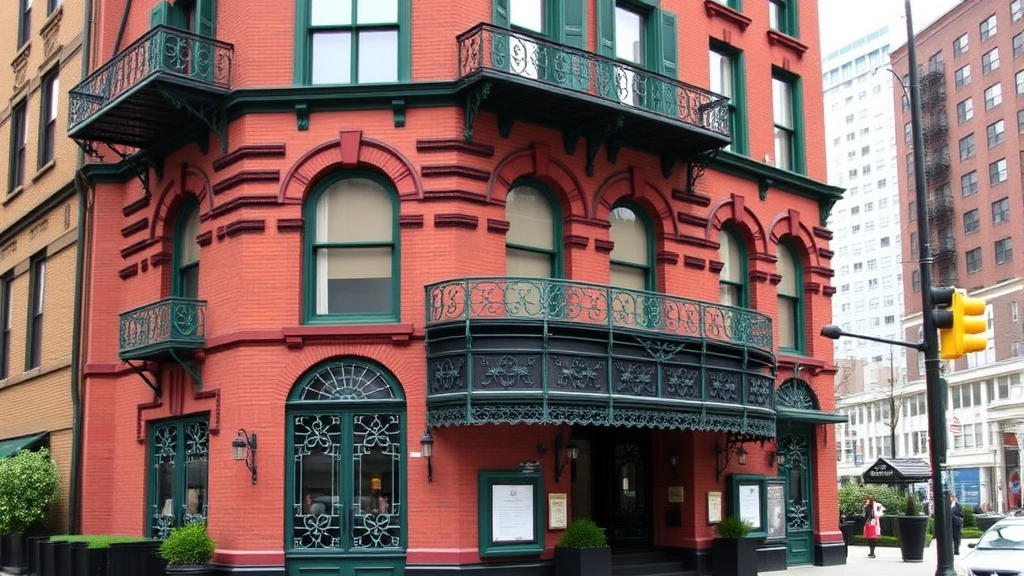
The Chelsea Hotel was constructed between 1883 and 1884 by Hubert, Pirsson & Company, designed by architect Hubert, with the distinctive red-brick Victorian Gothic Revival architecture that remains its signature feature today. The building was originally conceived as a cooperative apartment building, a relatively innovative housing concept for the era that allowed residents to own shares in the property rather than simply rent individual units. This cooperative structure fundamentally shaped the Chelsea’s character and contributed to its unique position as a residential community rather than a conventional commercial hotel operation.
The building’s location in what was then the outer reaches of Manhattan’s developed areas meant that it attracted a diverse population seeking affordable housing with artistic character. The Chelsea’s original design featured approximately 250 units with generous room dimensions, high ceilings, and abundant natural light—characteristics that made it particularly appealing to artists, sculptors, and creative professionals who needed spacious studios within their living spaces. The architectural details, including ornamental ironwork, decorative cornices, and distinctive Chelsea-green-painted facades, established the building’s distinctive aesthetic identity.
The cooperative ownership model meant that the Chelsea operated differently from typical rental properties. Residents had greater stability and investment in the building’s maintenance and character, creating a community-oriented living environment. This structure also provided protection against rapid gentrification and displacement, as cooperative members maintained control over who joined their community. Understanding this cooperative model is essential to comprehending why the Chelsea became a haven for long-term residents and why its later transition created such significant challenges for existing tenants.
The Golden Age of Bohemian Culture (1920s-1960s)
The Chelsea Hotel’s golden era began in the 1920s when it became the epicenter of New York’s bohemian and avant-garde movements. The building’s affordable housing, artistic atmosphere, and location in the rapidly developing Chelsea neighborhood made it irresistible to creative professionals fleeing more conventional residential areas. During this period, the Chelsea transformed from a quiet cooperative apartment building into a vibrant cultural institution where artistic movements were born, debated, and refined.
The 1930s and 1940s saw the Chelsea become home to writers, painters, sculptors, and musicians who would define American modernism. The building’s lobbies, hallways, and common spaces became informal galleries and gathering places where artistic collaboration flourished naturally. The Chelsea’s reputation as a sanctuary for creative expression attracted increasingly prominent cultural figures, establishing it as a destination for anyone serious about artistic pursuits in New York City. Compared to luxury hotels in New York City, the Chelsea offered something fundamentally different: authentic community and creative freedom rather than opulence.
The 1950s and 1960s represented the Chelsea’s peak cultural influence. The building became synonymous with the Beat Generation, Abstract Expressionism, and emerging countercultural movements. The Chelsea’s democratic mixing of artistic disciplines—visual artists living alongside musicians, writers adjacent to dancers—created unprecedented opportunities for cross-pollination of ideas and aesthetic innovation. The building’s tolerant management and commitment to maintaining affordable rents meant that even struggling artists could afford to live there, ensuring a continuous flow of creative energy and diverse perspectives.

Artistic Residents and Cultural Contributions
The Chelsea Hotel’s roster of residents reads like a catalog of 20th-century cultural achievement. Writer Arthur C. Clarke developed the concept for satellite communications while living at the Chelsea. Playwright Tennessee Williams, novelist Arthur Miller, and poet Allen Ginsberg all made the Chelsea their home. Visual artists including Robert Mapplethorpe, Jasper Johns, and numerous others created groundbreaking work within its walls. Musicians Bob Dylan, Leonard Cohen, and Jimi Hendrix either lived at the Chelsea or frequented it as a creative space. This concentration of artistic genius in a single residential building created an unparalleled cultural ecosystem.
The Chelsea’s cultural contributions extended beyond the achievements of individual residents. The building itself became a subject of artistic exploration and documentation. Photographer Stanley Kubrick famously filmed sequences at the Chelsea. Filmmaker Todd Haynes created “I’m Not There” with deep connections to the Chelsea’s cultural legacy. The Chelsea became a character in its own narrative—a symbol of artistic freedom, bohemian values, and resistance to commercialization. This meta-cultural status meant that living at the Chelsea carried cultural meaning beyond mere residential accommodation.
The building’s influence on housing preferences and creative lifestyle choices cannot be overstated. The Chelsea demonstrated that residential communities could prioritize artistic expression and community cohesion over maximum profit extraction. Its success inspired similar efforts to preserve affordable housing for creative professionals, influencing housing policy discussions for decades. The Chelsea proved that residential properties accommodating diverse needs could thrive culturally and economically, challenging conventional real estate wisdom about maximizing returns.
Residential Hotel Operations and Tenant Stability
In 1939, the Chelsea transitioned from a cooperative apartment building to a residential hotel operation. This transition, while preserving the building’s residential character, introduced new management structures and operational considerations. The residential hotel model allowed the Chelsea to maintain long-term tenants while also accommodating shorter-term visitors, creating a dynamic community environment. Many residents treated the Chelsea as their permanent home, maintaining studios and living spaces for decades, while others stayed for months or years before moving on to other creative pursuits.
The residential hotel structure, combined with committed management that prioritized community over profit maximization, created extraordinary tenant stability. Many Chelsea residents lived there for 20, 30, or even 40+ years, building deep relationships and contributing to institutional memory and cultural continuity. This long-term stability allowed residents to invest emotionally and creatively in their spaces and community, fostering the kind of lasting relationships and collaborative opportunities that defined the Chelsea’s cultural significance. Tenant retention at this level is virtually unprecedented in contemporary real estate markets.
The Chelsea’s approach to tenant relations and building management offered valuable lessons about preserving residential communities. Unlike typical commercial hotel operations focused on maximizing occupancy turnover and revenue per unit, the Chelsea’s management maintained relatively stable rent levels for long-term residents, accepted unconventional residents and behaviors, and prioritized community welfare over short-term profits. This management philosophy, while economically suboptimal by contemporary real estate standards, created the conditions for the Chelsea’s extraordinary cultural flowering. The building demonstrated that residential accommodations with character and community focus could maintain cultural significance while serving as permanent homes for their residents.
Modern Challenges and Preservation Efforts
Beginning in the 1980s, the Chelsea Hotel faced increasing pressure from real estate speculation, rising property values, and changing ownership priorities. The building’s location in an increasingly valuable neighborhood, combined with potential redevelopment opportunities, made it attractive to investors seeking maximum returns. The 1980s and 1990s brought management changes, rent increases, and conflicts between preservation-minded long-term residents and ownership interests focused on modernization and revenue maximization.
By the 2000s, the Chelsea had become a battleground between competing visions of its future. Long-term residents, many of whom had lived there for decades and had cultural and emotional investments in the building’s character, faced pressure from ownership seeking to renovate, raise rents, and reposition the Chelsea as a luxury property. The building’s aging infrastructure required significant investment, but proposed renovation plans threatened to displace the very residents who embodied the Chelsea’s cultural legacy. This conflict reflected broader tensions in New York City between preservation and development, between community stability and property value maximization.
Preservation efforts focused on protecting the Chelsea’s cultural heritage and ensuring that long-term residents could remain. Advocates argued for residential properties maintaining community character despite economic pressures to convert to luxury operations. The Chelsea’s struggle received national attention, becoming emblematic of conflicts over housing preservation, tenant rights, and urban development occurring in cities across America. Various proposals emerged to balance necessary building maintenance with tenant protection, exploring creative financing and ownership models that could sustain both the Chelsea’s physical structure and its resident community.
In 2023, the Chelsea underwent a significant transition when ownership changed hands, bringing new uncertainty about the building’s future direction. The question of how to preserve the Chelsea’s cultural legacy while maintaining a viable residential operation remained contentious. Some proposals included adaptive reuse strategies that could honor the building’s history while meeting contemporary housing standards. The Chelsea’s ongoing challenges illustrated the difficulty of preserving cultural institutions in real estate markets driven by property value maximization and the scarcity of affordable housing in desirable urban locations.
Housing Policy Implications and Lessons
The Chelsea Hotel’s history offers profound lessons for housing policy, urban development, and the relationship between real estate markets and cultural institutions. The building demonstrated that residential communities prioritizing long-term stability, community cohesion, and creative expression could flourish culturally and maintain economic viability without maximizing short-term profits. The Chelsea’s success during its cooperative and early residential hotel periods contradicted conventional real estate wisdom that assumed profit maximization and tenant turnover were necessary for financial sustainability.
The Chelsea’s challenges in recent decades illustrated the vulnerability of community-oriented residential models within competitive real estate markets. Without explicit legal protections, affordability guarantees, or ownership structures committed to community preservation, residential properties in valuable locations face relentless pressure to convert to higher-revenue uses. The Chelsea’s story demonstrated that market forces alone cannot preserve affordable housing or community-oriented residential institutions; intentional policy intervention and alternative ownership models are necessary.
Housing advocates and policy experts have proposed various mechanisms to preserve buildings like the Chelsea, including community land trusts, cooperative ownership structures, rent stabilization regulations, and landmark preservation laws. HUD’s public housing programs and the National Law Center on Homelessness and Poverty have documented how policy decisions affect residential stability and community preservation. The Chelsea’s experience suggests that protecting cultural institutions and affordable housing requires intentional policy frameworks rather than reliance on market dynamics or individual ownership goodwill.
The Chelsea Hotel also illustrated the importance of tenant rights protections and rent stabilization in preventing displacement of long-term residents. New York City’s rent stabilization program, while imperfect and politically contested, has been credited with preserving some residential stability in a market otherwise dominated by speculation and rapid gentrification. The Chelsea’s experience supported arguments for strengthened tenant protections, including just-cause eviction requirements, rent increase limitations, and community input in development decisions affecting established residential communities.
Contemporary housing policy discussions increasingly recognize the value of preserving mixed-income residential communities and protecting long-term residents from displacement. The Chelsea’s cultural significance derived largely from its economic diversity and the presence of struggling artists who could afford to live there while developing their craft. This observation supports policy arguments for maintaining affordable housing options in desirable urban locations and resisting the tendency toward complete economic segregation that market-driven housing markets produce. The Chelsea demonstrated that cultural vitality and urban livability depend partly on economic diversity and the presence of people engaged in creative work that markets undervalue financially.
For residential property owners and managers, the Chelsea’s history offers lessons about sustainable community building. Properties that invest in long-term resident relationships, maintain reasonable rent levels, and prioritize community welfare often develop stronger resident loyalty, lower turnover costs, and more stable operating environments than those pursuing maximum short-term revenue extraction. While this approach requires accepting lower profit margins than contemporary real estate markets reward, it can produce more satisfying and sustainable residential communities. Compared to 5-star hotels near me that prioritize luxury and transient guests, the Chelsea’s residential hotel model offered an alternative vision of hospitality centered on community and belonging.
The Chelsea Hotel’s evolution also highlighted the importance of architectural preservation and historic district protection in maintaining neighborhood character and cultural continuity. The building’s distinctive Victorian Gothic Revival architecture and Chelsea-green painted facade have become iconic elements of the neighborhood’s identity. Preservation policies that protect historic structures from demolition or inappropriate renovation help maintain neighborhood continuity and the physical settings that foster community identity. The Chelsea’s architectural integrity contributes significantly to its cultural meaning and continued appeal to residents and visitors.
FAQ
What was the Chelsea Hotel’s original purpose when it opened in 1884?
The Chelsea Hotel was originally designed as a cooperative apartment building, a relatively innovative housing concept where residents owned shares in the property rather than renting individual units. This structure gave residents greater stability and investment in the building’s maintenance and character, creating a community-oriented living environment that attracted artists and creative professionals.
Why did the Chelsea Hotel become associated with artistic and bohemian culture?
The Chelsea’s affordable housing, generous room dimensions, studio-suitable spaces, and location in a developing neighborhood made it appealing to artists. Its cooperative ownership and later residential hotel structure prioritized community stability over profit maximization, allowing long-term residents to build deep creative relationships. The concentration of artistic talent attracted more artists, creating a self-reinforcing cultural ecosystem that became legendary.
How did the transition from cooperative to residential hotel affect the Chelsea’s character?
The 1939 transition to residential hotel operations preserved the Chelsea’s residential character while introducing more flexible occupancy arrangements. The new structure allowed both long-term residents and shorter-term visitors, creating dynamic community while maintaining the stability that enabled long-term creative work and community building.
What factors threatened the Chelsea Hotel’s traditional character in recent decades?
Rising property values in the Chelsea neighborhood, changing ownership priorities, aging infrastructure requiring investment, and pressure from real estate speculation created tension between preservation and development. Ownership interests seeking to modernize and maximize revenue conflicted with long-term residents’ interests in maintaining affordability and community character.
What housing policy lessons does the Chelsea Hotel’s history offer?
The Chelsea demonstrated that community-oriented residential models can succeed economically without maximizing short-term profits, that long-term tenant stability produces stronger communities than rapid turnover, and that protecting affordable housing requires intentional policy intervention rather than reliance on market forces alone. The building’s experience supports arguments for rent stabilization, tenant protections, and alternative ownership models that prioritize community preservation.
Could the Chelsea Hotel model be replicated in contemporary housing markets?
Replicating the Chelsea’s model would require intentional policy frameworks including cooperative ownership structures, community land trusts, rent stabilization, landmark preservation laws, and ownership committed to community welfare over profit maximization. While challenging within contemporary real estate markets, growing interest in affordable housing and community-oriented development makes Chelsea-inspired models increasingly relevant to housing policy discussions.